
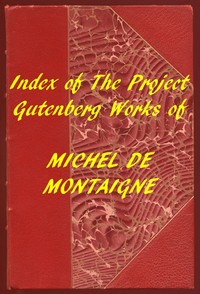
Index of the Project Gutenberg Works of Michel De Montaigne by Michel de Montaigne
Let's be clear: this isn't a storybook. The 'Index of the Project Gutenberg Works of Michel de Montaigne' is a portal. It's a free, digital table of contents leading you to the complete 'Essays' of a 16th-century French nobleman who pretty much invented a new way of writing. There's no plot in the traditional sense. Instead, you follow the meandering, brilliant, and often contradictory thoughts of Montaigne himself across 107 chapters (or 'essays'). He starts by examining why we cry, questions the education system of his day, shares intimate details about his kidney stones, debates the customs of 'savages' in the New World, and tries to pin down the nature of friendship, fear, and what it means to live well.
Why You Should Read It
You should read Montaigne because he is the most relatable dead guy you'll ever meet. His whole project was to paint a portrait of a regular, flawed human being—himself. He doesn't preach from a pedestal; he thinks out loud on the page. When he writes 'On Solitude' or 'That to Philosophize is to Learn to Die,' it's not a dry lecture. It's a man grappling with the same anxieties and questions we have today. His voice is candid, funny, and startlingly modern. He doubts everything, especially his own opinions. In a world full of loud certainties, Montaigne's gentle skepticism is a balm. You don't read him to agree with him; you read him to watch a master observer make sense of the human condition.
Final Verdict
This is for the curious, the overthinkers, and anyone who enjoys a great conversation. If you like podcasts where hosts explore big ideas, or if you've ever journaled to understand your own mind better, Montaigne is your spiritual ancestor. It's perfect for dipping into—read an essay on 'Idleness' or 'The Power of the Imagination' over coffee. History buffs will love the snapshot of the Renaissance mind, but you don't need any background. You just need an interest in people. Thanks to Project Gutenberg, this 16th-century wisdom is free and accessible. All you have to do is click and meet your new old friend.
This content is free to share and distribute. It is available for public use and education.

Carol Anderson
7 months agoFive stars!