
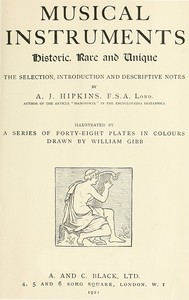
Musical Instruments, Historic, Rare and Unique by Alfred J. Hipkins
Published in 1888, this book is the life's work of Alfred J. Hipkins, a man who tuned pianos for famous composers like Chopin but whose real passion was for the instruments that came before. He wasn't just a collector of facts; he was a preservationist in an age of rapid change. The Industrial Revolution was standardizing everything, including music. Hipkins saw beautiful, quirky, and historically important instruments gathering dust or being broken apart, and he decided to document them before their secrets were lost forever.
The Story
There isn't a traditional plot with characters, but there is a clear narrative drive: the rescue mission. Hipkins takes us on a grand tour, from ancient Egyptian harps and medieval lutes to the elaborate keyboard instruments that led to the modern piano. Each chapter focuses on a different family of instruments—strings, woodwinds, keyboards, and more. He describes their construction, their unique sounds, and their place in history with the detail of a craftsman and the wonder of a fan. He includes beautiful illustrations, making it a visual feast as well. The 'story' is the journey of discovery, showing us not just objects, but the evolution of human creativity in sound.
Why You Should Read It
This book changes how you hear music. After reading about the warm, buzzing sound of a viola da gamba or the delicate, plucked tones of a harpsichord, you'll listen to a Baroque piece and actually hear the difference. Hipkins's writing is full of personality. You can feel his frustration when he talks about instruments that were poorly restored, and his joy when he describes a perfect, clear tone. It’s technical enough to satisfy curiosity but written with a clear love for the subject that makes it accessible. It turns a museum exhibit into a living, breathing world of sound.
Final Verdict
Perfect for music lovers, history nerds, and anyone who enjoys 'how things work' books. If you play an instrument, you'll find it especially rewarding. It's not a casual skim; it's a book to savor, to look at the pictures, and to read a section at a time. Think of it as a conversation with the most knowledgeable guide in the most incredible instrument collection you've ever seen. In our digital age of perfect, reproducible sound, Hipkins's book is a powerful reminder of the physical, handmade beauty and variety that shaped our musical past.
Legal analysis indicates this work is in the public domain. Use this text in your own projects freely.





Richard Sanchez
1 year agoAs someone who reads a lot, it challenges the reader's perspective in an intellectual way. Don't hesitate to start reading.