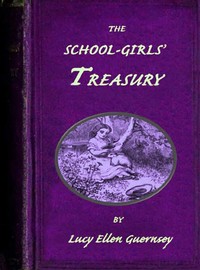
The school-girls' treasury : or, Stories for thoughtful girls. by Guernsey
Let's crack open this 1850s time capsule. The School-Girls' Treasury isn't one long story, but a series of short tales, each featuring a different girl facing a very specific character test. Think of it as a moral obstacle course for Victorian teenagers.
The Story
There's no overarching plot. Instead, each chapter introduces us to a girl with a flaw: there's the one consumed by vanity over her looks, another who can't control her jealous temper, a third who is painfully lazy, and one who loves to spread a juicy bit of gossip. The 'story' in each case is simple: we see how this flaw causes trouble in her life—strained friendships, family disappointment, personal shame. Then, through a lesson (often learned the hard way or delivered by a wise adult), she sees the error of her ways and reforms. The conflict is always internal: the struggle between a natural impulse and the rigid social ideal of a 'thoughtful' young lady.
Why You Should Read It
I'll be honest, you don't read this for pulse-pounding action. You read it as a piece of social history. What fascinated me wasn't the morals themselves (which can feel heavy-handed), but the sheer intensity of the microscope placed on these girls' behavior. Every thought, word, and action was judged. It's a powerful reminder of how narrowly 'goodness' was defined for women. Reading these stories, I kept thinking about the modern conversations we have about the pressure on girls to be perfect—pleasing, kind, selfless. This book shows those roots, deep in the 19th century. The characters are more like archetypes than fully fleshed-out people, but they serve their purpose: they are mirrors held up to the reader of 1850, asking, 'Are *you* this thoughtful?'
Final Verdict
This isn't for everyone. If you want a fast-paced novel, look elsewhere. But if you're a curious reader who loves history, especially women's history, or if you enjoy young adult fiction and want to see its extremely proper ancestor, this is a gem. It's perfect for book clubs looking for a short, discussion-rich read (the conversations about then vs. now would be amazing), teachers wanting a primary source on 19th-century values, or anyone who enjoys seeing how the past can strangely echo the present. Approach it not as a storybook, but as a historical document wrapped in a moral fable, and you'll find it utterly absorbing.
This text is dedicated to the public domain. Access is open to everyone around the world.