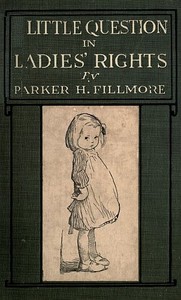
A Little Question in Ladies' Rights by Parker Fillmore
Parker Fillmore's A Little Question in Ladies' Rights is a short story that packs a quiet wallop. Set in a seemingly sleepy American town, it centers on the local women's club and their plan to host a formal debate. The chosen subject is meant to be safely impressive: the advancement of women's rights.
The Story
The club's president, Mrs. Brewster, is proud of this modern undertaking. She envisions a civilized event that will show the town how refined and forward-thinking their group is. Enter Miss Catherwood, a new resident with a calm demeanor and a mind like a steel trap. When the club divides into teams to prepare arguments, Miss Catherwood is placed on the side opposing wider rights for women. To everyone's surprise, she doesn't just play along. She takes the assignment seriously, researching historical and legal precedents with devastating logic. Her preparations begin to unsettle the entire project, exposing that the 'progressive' club members are far more comfortable with the idea of rights than with any actual challenge to the status quo. The real conflict isn't in the debate hall, but in the anxious meetings leading up to it, as polite facades crack under the pressure of a genuinely inconvenient question.
Why You Should Read It
What I love about this story is how it holds a mirror up to performative activism. Fillmore isn't writing about firebrand suffragettes on picket lines (though that's the backdrop). He's writing about the uncomfortable space in between—where good intentions meet the fear of real change. Miss Catherwood is a fantastic character precisely because she's not loud; she's precise. She uses the club's own rules and their desire for 'intellectual exercise' to show them the hollowness of their own positions. The humor is dry and comes from the sheer awkwardness of people being politely called out on their own biases. It feels incredibly relevant, a reminder that the biggest social shifts often start with one person asking a question everyone else is avoiding.
Final Verdict
This is a perfect pick for readers who enjoy character-driven historical fiction with a sharp edge. It's for anyone who's sat through a book club or town hall meeting and sensed the unspoken tensions simmering beneath the polite conversation. You don't need to be a history expert to get it—Fillmore's observations about human nature and social hypocrisy are timeless. Think of it as a literary espresso: small, strong, and guaranteed to wake you up. A brilliant, understated look at the quiet moments that change minds.
This book is widely considered to be in the public domain. It serves as a testament to our shared literary heritage.